

 Imraahn Mukaddam
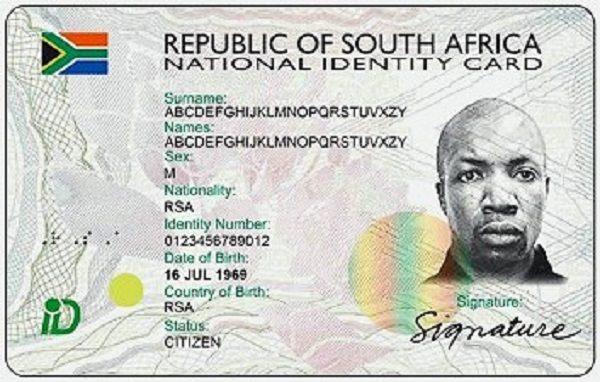
South Africa’s democracy is a celebrated global symbol of liberation, built on the principle of universal suffrage. Yet, three decades into freedom, a profound contradiction threatens its foundation: the systematic exclusion of millions of its most vulnerable citizens from the voter roll, not by explicit law, but by the invisible barrier of a missing identity document.
While political debate rages about policy and leadership, a quieter crisis unfolds in the country’s townships, rural hinterlands, and informal settlements. It is the crisis of the unregistered and the undocumented. For millions of eligible South Africans, disproportionately the poor, the poorly educated, and the unemployed, the simple green ID book or smart ID card remains an elusive key to a locked door. They are not merely unregistered to vote; they are, in a bureaucratic sense, non-persons in the eyes of the electoral system.
Failure of Access: A Corrosive Impact on Democracy
This is not a failure of will, but a failure of access. The journey to a chronically under-capacitation Department of Home Affairs office can mean a day’s lost wages, transport costs that rival a week’s food budget, and navigating a system infamous for its labyrinthine processes, lost files, and technical glitches. For a domestic worker in a sprawling township or an elderly resident of a remote village, the obstacles are insurmountable. Without foundational literacy, the paperwork is a foreign language. Without a fixed address, the system cannot find you. Without a birth certificate, often the first document never obtained, the path to an ID is blocked at its very start.
The impact on democracy is corrosive. When millions are disenfranchised before a single vote is cast, the electorate no longer represents the full spectrum of the nation. It becomes a skewed sample. Political parties, driven by the pragmatism of electoral strategy, naturally focus their resources and policy promises on the registered voter base. This creates a vicious cycle: the issues that most affect the undocumented poor, from water access to land tenure, are de-prioritised, as these constituencies literally do not exist on the electoral map.
Lack of ID Perpetuates Class Divide in South Africa’s Democracy
This dynamic perpetuates a form of minority and class rule. The political system, meant to be the great equaliser, instead becomes an echo chamber for those with the means to navigate bureaucracy. The result is a governance feedback loop where policy is tailored for the enfranchised middle class and the organised, while the poorest, most marginalised citizens are left with a deepening sense of alienation. They see a government that does not respond to their needs, and in turn, they see no reason to fight for a document to participate in a system that ignores them.
READ MORE about Local Government Elections 2026
Democracy is not merely the act of voting; it is the promise of equal representation. When that promise is broken for the most vulnerable, the entire system is weakened. Until South Africa confronts the administrative apartheid that leaves its poorest citizens without the foundational right to an identity, its democracy will remain incomplete; a thriving system for the few, and a broken promise for the millions it was meant to serve.
Fediverse Reactions
Post URL
Your Profile
Why do I need to enter my profile?
This site is part of the ⁂ open social web, a network of interconnected social platforms (like Mastodon, Pixelfed, Friendica, and others). Unlike centralized social media, your account lives on a platform of your choice, and you can interact with people across different platforms.
By entering your profile, we can send you to your account where you can complete this action.


