

 Imraahn Mukaddam
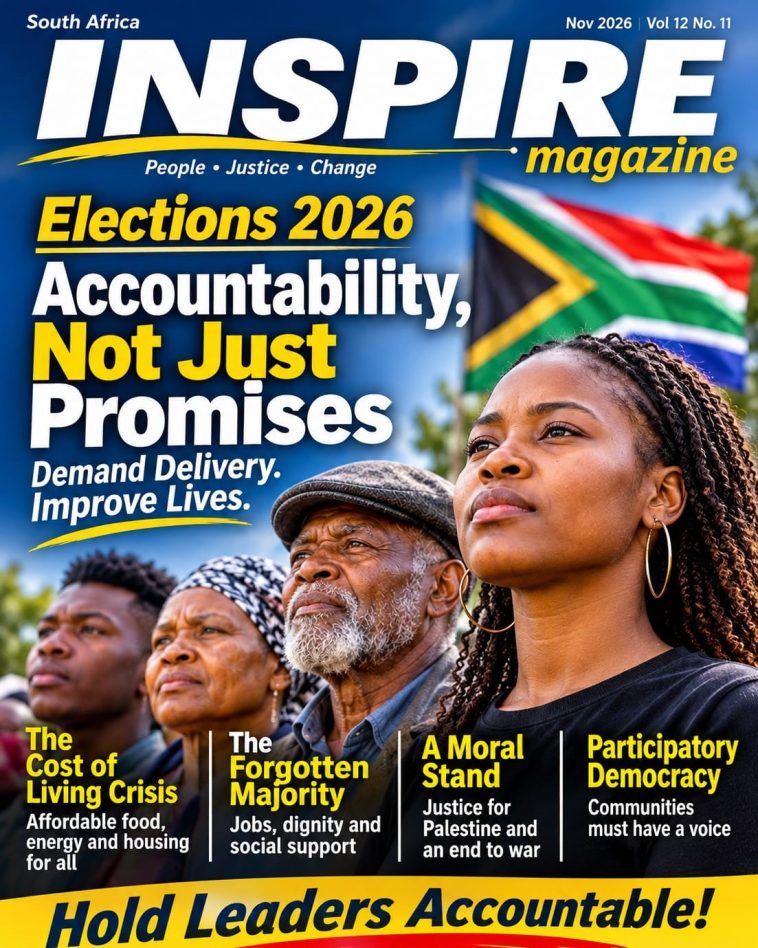
Democracy must deliver for the people, especially those who need it most.
As South Africa approaches another election, we should ask: What do we expect from those seeking our votes?
Elections often focus on parties, personalities and promises. But how often do we examine what happened to promises made during the previous election?
Democracy cannot mean voting every few years and abandoning public scrutiny. Citizens must demand answers, question decisions and hold leaders accountable.
Accountability must measure our democracy.
-
Beyond promises: Where is the delivery?
Political parties must account for their records. What have they delivered? How have they used public resources? Have they improved people’s lives?
Promises about jobs, housing, education, healthcare and safety must be measured against results.
For millions of South Africans, the real concerns are food, employment, housing, education and basic services.
-
The cost-of-living crisis
Accountability must confront rising costs. Food, electricity, water, transport, healthcare and education are increasingly unaffordable, especially for grant recipients, pensioners, unemployed youth and informal workers.
We must ask:
- How will you make basic goods affordable?
- How will you address rising utility and transport costs?
- What plans will create sustainable jobs?
- How will you support small businesses and informal traders?
- What will you do about housing and rising rents?
- How will you protect people from deeper poverty?
Economic policy must be judged by whether it improves people’s lives.
-
The forgotten majority
The poor, unemployed youth, pensioners, persons with disabilities and working-class families cannot remain an afterthought.
For many, grants are the only reliable income. Others survive through informal or insecure work. These are people whose dignity and futures depend on government decisions.
The key question is:
Are the lives of the poorest and most vulnerable improving?
-
Nothing about us without us
Citizens have a right to know how public money is spent and how decisions are made. But transparency is not enough.
Communities must be meaningfully consulted on housing, transport, service delivery, local development and safety. Residents must be partners in decision-making, not merely recipients of government programmes.
NOTHING ABOUT US WITHOUT US.
-
Leadership requires a moral compass
Political accountability also includes South Africa’s response to injustice abroad. Leaders must take clear positions on genocide, war crimes, starvation, aggression, humanitarian blockades and collective punishment.
Human rights cannot be defended selectively.
International conflicts also affect people at home through higher food, fuel, transport and essential-goods costs. Leaders must explain both their moral positions and their humanitarian and economic consequences.
-
Public office is a responsibility
Public office is not a privilege or opportunity for self-enrichment. Representatives must remain accessible, explain their decisions and accept responsibility when things go wrong.
Corruption, maladministration, nepotism and abuse of public resources cannot be excused by party loyalty.
Our loyalty must be to the Constitution, the public interest and the people.
-
Accountability continues beyond elections
Citizens must also protect democracy. Community organisations, civic movements, faith groups, residents’ associations, unions and individuals must monitor leaders and demand better governance.
We must attend public meetings, examine budgets, monitor service delivery and challenge decisions that harm the public interest.
Democracy must be an ongoing relationship between elected leaders and the people.
-
The choice before us
Voters should look beyond slogans, personalities and historical loyalties. We should ask every candidate:
What have you done with the mandate you received?
- What will you do differently?
- How will you address poverty, unemployment, inequality, housing and failing services?
- How will communities have a genuine voice?
- Where do you stand on fundamental human rights and humanitarian issues?
The real test of democracy is not simply who wins an election. It is whether leaders deliver, protect the vulnerable, listen to communities and uphold justice and humanity.
When the next election comes, let us not simply ask who wants our votes.
Let us ask who is prepared to account for them.
Fediverse Reactions
Post URL
Your Profile
Why do I need to enter my profile?
This site is part of the ⁂ open social web, a network of interconnected social platforms (like Mastodon, Pixelfed, Friendica, and others). Unlike centralized social media, your account lives on a platform of your choice, and you can interact with people across different platforms.
By entering your profile, we can send you to your account where you can complete this action.