

 Linda Ensor, Business Daily Live
 Marais’s movement to mull formation of new political party
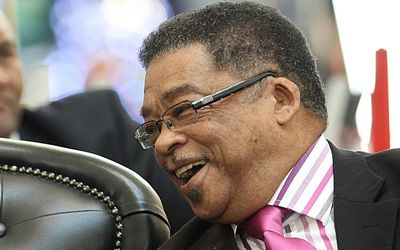
THE Brown Empowerment Movement (Bruin Bemagtigingsbeweging, or BBB), established recently by former Western Cape premier Peter Marais, will hold a conference this month, which he says is very likely to decide on the founding of a political entity to contest next year’s general election.
The conference will bring together 110 delegates from 15 organisations which believe there is a need to give focus to the “plight” of coloured people, who they say are discriminated against by the government’s policies of black economic empowerment and affirmative action.
Among those attending the conference on June 17 — under the theme “Where to Mulattos?” — will be representatives of the Cape Corps Military Veterans, Independent Civics of South Africa, the Christian Democratic Party from Gauteng, the trade union Solidarity, the Nationalist Coloured Party, and religious leaders.
Mr Marais said he thought it “more than just a possibility” that a decision to fight the elections would be taken at the conference but that the BBB would not become that party. “People have lost faith in the two dominant parties in South Africa, the Democratic Alliance and the African National Congress and are saying we need a third political force because none of these parties serve their interests anymore,” he said.
But political analyst Daniel Silke noted that “attempts to mobilise politically around coloured ethnicity in the Western Cape have been tried before and have largely failed as a result of the coloured voter body choosing a political party which is not necessarily exclusively an ethnically-based political movement.
“Coloured voters have yet to show any specific nationalistic or ethnocentric view when it comes to their political affiliations. I think this idea has little chance of any electoral traction whatsoever.
“The coloured voting body will continue to support the mainstream parties,” Mr Silke said. “There is a general trend in South African politics away from smaller, sectional or ethnically-based parties to larger, more universalistic political movements.”
Mr Silke said Mr Marais was tapping into real concerns in the coloured community which was squeezed during tough economic times, but that this would not translate into political support.
Mr Marais established the BBB as a civil rights movement to fight for coloured rights after he was approached by officials in the Department of Correctional Services who complained that they were repeatedly overlooked for promotion despite their long service and qualifications.
This was because the department applied the national demographic imperative of the Employment Equity Act, which gave preference to Africans, rather than the Western Cape’s provincial demographic criteria.
The officials took their complaint to the Labour Court.
Mr Marais claimed that he had received similar complaints of disgruntlement from marginalised members of the South African Defence Force, the South African Police Service and the navy and that the BBB was providing assistance to “scores” of nongovernmental organisations.
Coloured students at the University of the Western Cape had allegedly also complained that they were not getting bursaries which they believed were allocated on the basis of race.
The employment practices of the provincial and local governments had also been a source of frustration, Mr Marais said. “The coloured people are enraged” about affirmative action and these sentiments were ” widespread”.
Find the original Business Daily Live article here.
Fediverse Reactions
Post URL
Your Profile
Why do I need to enter my profile?
This site is part of the ⁂ open social web, a network of interconnected social platforms (like Mastodon, Pixelfed, Friendica, and others). Unlike centralized social media, your account lives on a platform of your choice, and you can interact with people across different platforms.
By entering your profile, we can send you to your account where you can complete this action.