

 Ryan Swano
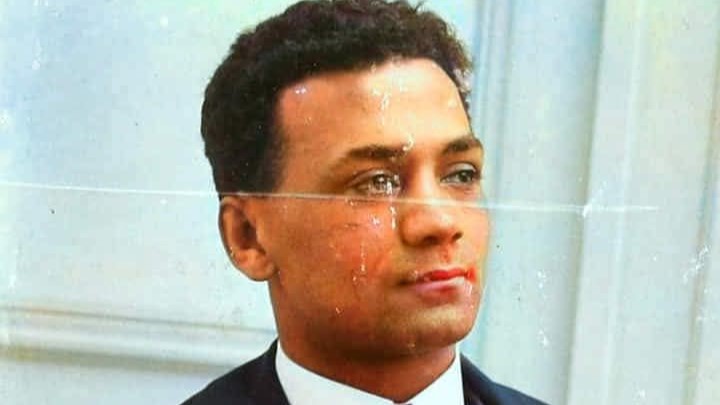
On 25 March 1907, in a packed fight hall in London’s East End, a boxer born and raised on the Cape Flats made history. Andrew Daries Jeptha became the first black fighter to win a British boxing title when he knocked out Curly Watson in the fourth round to claim the welterweight crown. Yet more than a century later, his name is still too often absent from official histories of British sport.
Born on 30 December 1879 in Cape Town’s District Six in what was still the British Cape Colony, Jeptha was the son of a carpenter and attended the Marist Brothers School in Hope Street. His early talent as a Barefist Boxer was undeniable. Before the age of 18 he had already turned professional, fighting at the Vaudeville Theatre and with Fillis’ Circus. In 1902, after winning a competition organised by visiting world champion Kid McCoy, Jeptha travelled to England to pursue greater opportunity.
Like many fighters of his era, he began in booth fighting tents, reportedly drawing crowds for promoter Peddlar McMahon. His first recorded bout in England was a loss to Jim Green in Liverpool in September 1902, but Jeptha’s resilience and power soon made him a popular attraction. Over the course of his career he fought 74 times, winning 32 contests, 21 by knockout. In France he was called “le Negre” and in Ireland “the Boer”, labels that reflected both his racial identity and the imperial politics of the time. In today’s South African Apartheid-based political terms he would have been classified as a Coloured person.
The Historic Night at Wonderland
The defining moment of his career came at Wonderland, 100 Whitechapel Road, Mile End, London. Fighting for a purse of £550, Jeptha faced Curly Watson, the Royal Navy’s boxing champion. In the fourth round he delivered a knockout blow that secured the British welterweight title and etched his name into sporting history.
It was a remarkable achievement. Britain was at the height of its imperial power, and racial barriers in sport were rigid and unspoken but deeply enforced. Jeptha’s victory challenged those boundaries. Yet his reign was brief. In August 1907, in Cardiff, he lost the title to Joe White.

Interestingly, official sources spell the Boxing Champion’s name as Andrew Jeptha, while he himself autographed his name as Andrew Jephtha, which is more in line with the common spelling among people in the modern-day Coloured popupation group.
Triumph and Tragedy
Behind the triumph lay an unfolding tragedy. Even before the 1907 title fight, Jeptha had been receiving treatment at Moorfields Eye Hospital for damage to his eyesight. Blurred vision did not stop him from continuing to fight, but it placed him at grave risk. In October 1909, during a bout against Jim Doran, the sight in his right eye was permanently damaged. A further fight with Joe White in July 1910 effectively ended his career.
Prominent figures in British sport, including referee John Douglas and his son Johnny Douglas, attempted to help him find financial stability. Supporters bought him a tobacconist and confectionery shop in Walthamstow, but deteriorating vision made it impossible to sustain.
For a time, Jeptha also appeared on stage in a vaudeville production titled Black against White, alongside actress Mabel Goldswain and British lightweight champion Jack Goldswain. In a cruel irony, the repeated blows taken during performances reportedly worsened his eye injuries.
A Return Home in Hardship
Blinded and financially strained, Jeptha returned to South Africa without his wife, Abby Mitchell of Lancashire, and their four children. In Cape Town he was reportedly seen sitting between the flower sellers on Adderley Street, selling a booklet for one shilling titled A South African Boxer in Britain – Experiences of Andrew Jephta. A copy remains in the South African Museum.

Andrew Jeptha died in 1931. He was just 51 years old.
His story is one of brilliance and neglect, courage and cost. As debates about race, representation and recognition continue in sport, Jeptha’s life stands as an early chapter in that struggle. Born and raised on the Cape Flats, he conquered a British ring at a time when few believed he should even be there. History may have overlooked him, but the record remains clear. He was a champion.
This article was inspired by Jason Patrick Hanslo’s Posts in the Cape Historical Society Facebook Group.

Fediverse Reactions
Post URL
Your Profile
Why do I need to enter my profile?
This site is part of the ⁂ open social web, a network of interconnected social platforms (like Mastodon, Pixelfed, Friendica, and others). Unlike centralized social media, your account lives on a platform of your choice, and you can interact with people across different platforms.
By entering your profile, we can send you to your account where you can complete this action.


