

 Imraahn Mukaddam
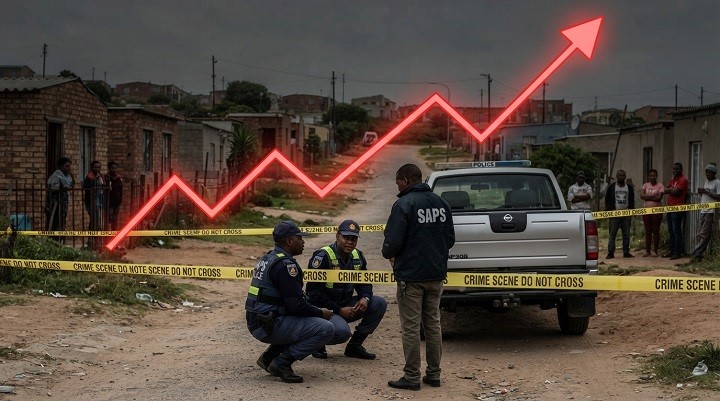
South Africa is in danger of normalising violent crime. Every three months, we receive another set of crime statistics, government officials explain the increases and decreases, and we move on until the next announcement.
But behind every statistic is a human life.
Between July and September 2026, 5,590 people were murdered in South Africa. That is roughly 60 people every day. Yes, this is a reduction from the 5,794 murders recorded during the same period last year. It represents progress, and we should acknowledge that.
But let us put this into perspective: a 3.5% reduction in murders does not make the victims 3.5% less dead.
For the families who have lost someone, there is no statistical comfort. Their loved ones are not coming home. Their grief does not become smaller because the numbers have gone down.
When Crime Becomes a Statistical Exercise
Crime statistics are important. They help us understand trends, identify hotspots and measure the performance of law enforcement. But they must never become a substitute for confronting the reality of violent crime.
The Western Cape remains particularly affected. Of the 2,552 firearm-related murders nationally, 732 were recorded in our province. The province also accounted for 208 of the 261 gang-related murders nationally. In Delft alone, 1,016 contact-crime cases were recorded during the quarter.
And then there are the 9,908 reported rapes, including 4,362 victims identified as children under 18 in cases where age and sex were verified.
These are not just numbers. They represent lives traumatised, families shattered and communities living with fear.
At what point did we become so accustomed to high crime leves and high murder rate that we simply accept it as part of everyday life?
Progress is Important, But Trust is Something Else
We should acknowledge the reductions in certain categories of crime, including murder, carjacking and truck hijacking. These improvements matter.
But there is a difference between improved statistics and restored public confidence.
For many people, the experience of crime is not measured by quarterly reports. It is measured by whether they feel safe walking home, whether their children can play outside, whether the police respond when called, and whether those responsible are ever brought to justice.
There is a serious trust deficit between communities and the institutions meant to protect them. Government cannot simply announce that public safety is improving and expect people to believe it. Trust must be earned through visible, professional and accountable policing, effective investigations and consequences for those who commit these crimes.
We Cannot Police Our Way Out of This Crisis
Policing is essential, but it cannot be our only response. We must also confront the conditions that allow violence to flourish: poverty, unemployment, inequality, substance abuse, the proliferation of illegal firearms and the neglect of vulnerable communities.
This is particularly important on the Cape Flats, where generations of spatial inequality and social exclusion continue to shape people’s lives.
We need stronger social crime-prevention programmes, opportunities for young people, safer public spaces and properly supported community safety structures. Communities must be partners in crime prevention, not simply places where government arrives after tragedy has struck.
This is what I mean when I speak about governing with our feet on the street. We need a government that understands the lived reality of communities, but we also need organised citizens who are prepared to participate, mobilise and hold institutions accountable.
The Value of Human Life Cannot Be Measured in Percentages
We can welcome a downward trend without pretending that the crisis is over. We can recognise the work being done by police officers while demanding better performance and accountability from the institutions responsible for our safety.
But we must never allow the language of statistics to dull our sense of outrage.
Those 60 people murdered every day had names, families, dreams and futures. They were somebody’s child, parent, partner, friend or neighbour.
A government may celebrate a downward trend, but a grieving family cannot celebrate a statistical improvement.
Sixty people a day. When did we decide that this high murder rate was an acceptable price to pay for living in South Africa?
Fediverse Reactions
Post URL
Your Profile
Why do I need to enter my profile?
This site is part of the ⁂ open social web, a network of interconnected social platforms (like Mastodon, Pixelfed, Friendica, and others). Unlike centralized social media, your account lives on a platform of your choice, and you can interact with people across different platforms.
By entering your profile, we can send you to your account where you can complete this action.