

 Ryan Swano
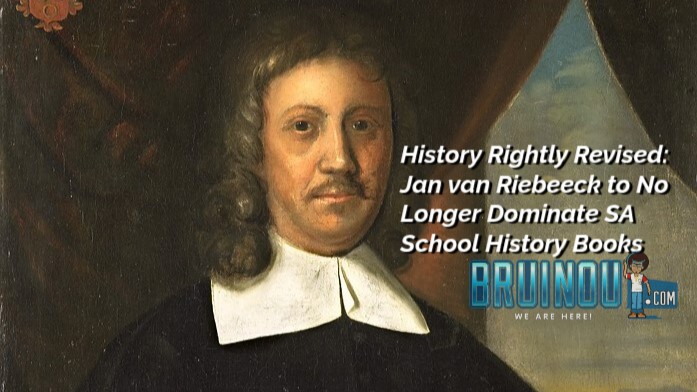
South Africa’s evolving history curriculum is not an act of erasure. It is an act of correction. For far too long, the story of this country has been told through a narrow lens that elevated colonial figures while side-lining the voices, experiences and agency of those who were here long before them. The decision to reposition Jan van Riebeeck within school history is not only justified, it is necessary.
At the centre of this shift is a simple but powerful idea. History must reflect the full story of a people, not just the version that served a past political agenda. Under Apartheid education, Van Riebeeck was constructed into a near-mythical founding figure, portrayed as a civilising hero who “established” the Cape in 1652. What that narrative conveniently ignored was the presence, systems and economies of indigenous communities such as the Khoikhoi, who had long been engaged in trade and social organisation before European arrival.
Challenging a Manufactured Narrative
The reality is far less flattering than the legend. Jan Van Riebeeck was an employee of the Dutch East India Company, sent to the Cape not to conquer, but to establish a refreshment station and build cooperative trade relations with local communities. Instead, his tenure became associated with conflict, dispossession and the early foundations of colonial expansion. Historical records also point to him being found guilty of corruption during his service in the East, a detail often omitted in traditional textbooks that preferred a cleaner, more heroic image.
Rebalancing the curriculum does not mean removing Jan Van Riebeeck entirely. It means placing him in proper context. It means teaching learners that South African history did not begin in 1652. It means acknowledging that the arrival of European settlers was not the start of civilisation in the region, but rather the beginning of a deeply contested and often violent period of change.
We as a South African nation needs to understand and acknowledge The Lie of 1652.
Towards a More Inclusive Curriculum
The proposed curriculum changes aim to introduce a broader African-centred perspective, one that recognises indigenous knowledge systems, pre-colonial trade networks and the lived experiences of communities who were historically marginalised in formal education. This is not about replacing one bias with another. It is about creating balance.
Unsurprisingly, not everyone welcomes this shift. Organisations such as AfriForum and other conservative groups have raised concerns, arguing that the changes amount to a politicisation of history or an attempt to downplay European contributions. Some critics frame it as an attack on heritage, suggesting that figures like Van Riebeeck are being unfairly targeted or diminished.
WATCH: Lester Kiewit on Cape Talk – Good riddance: Is Jan van Riebeeck history?
Debate Reflects Deeper Tensions & Opposition to Decolonisation
But these objections often rest on the same flawed premise that shaped the old curriculum. The idea that acknowledging a fuller, more complex history somehow weakens national identity. In truth, the opposite is the case. A country that understands its past in all its complexity is better equipped to navigate its future. Decolonisation of history does not strictly mean the outright erasure of colonial history, but presenting that history in a facts-based context.
What is being challenged here is not history itself, but the hierarchy within history. The elevation of Jan Van Riebeeck above all others was never neutral. It was a deliberate choice made within a political system that sought to justify colonialism and Apartheid. Revising that imbalance is not revisionism in the negative sense.
It is the type of decolonisation that is necessary for Restoration.
516-Year Legacy of the Salt River Battle Memorialised in Cape Town
History That Reflects All Our People
There is also an important educational benefit to this shift. When learners see themselves reflected in the curriculum, when they engage with histories that speak to their own communities and identities, the subject becomes more meaningful. History is no longer a distant story about European arrivals. It becomes a living narrative that includes their ancestors, their cultures and their contributions.
South Africa’s story is layered, diverse and at times uncomfortable. It cannot be reduced to a single figure or moment. By moving away from the overemphasis on Jan Van Riebeeck, the education system is taking a step toward a more honest telling of that story.
This is not about tearing down the past. It is about telling it properly. And that is something long overdue.
Fediverse Reactions
Post URL
Your Profile
Why do I need to enter my profile?
This site is part of the ⁂ open social web, a network of interconnected social platforms (like Mastodon, Pixelfed, Friendica, and others). Unlike centralized social media, your account lives on a platform of your choice, and you can interact with people across different platforms.
By entering your profile, we can send you to your account where you can complete this action.