

 Henriette Abrahams
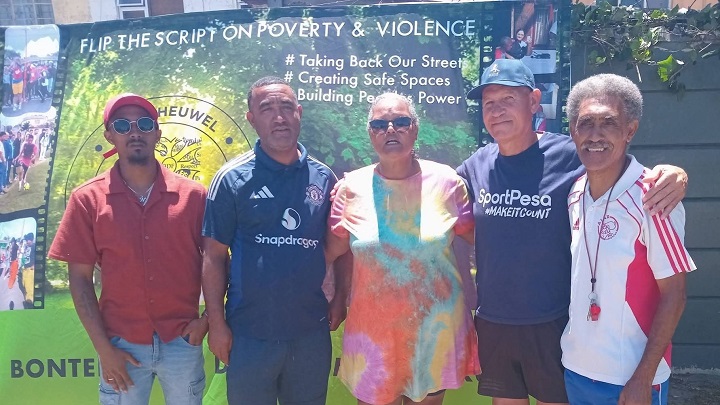
Children on the Cape Flats are being exploited by poverty and systemic neglect. Families struggle to survive, schools and social services are under-resourced, and gangs fill the void, offering money, drugs, and a sense of belonging. Many children are coerced through hunger or homelessness into doing things no child should ever face. This is not a matter of choice. If we do nothing, we are complicit in the destruction of a generation.
What we are seeing on the Cape Flats is not simply children joining gangs. It is children being pushed out of safe spaces and absorbed into violent systems that are already operating around them.
Research from the Institute for Security Studies shows that gangs are recruiting younger children, but the real question we must ask is: why are children so vulnerable to recruitment in the first place?
When children grow up without fathers or male role models
The truth is stark. Poverty, unemployment, and substance abuse intersect with deep intergenerational trauma. Many children grow up without fathers or male role models, and in households where adults are struggling to survive, guidance and protection are scarce. Data from Statistics South Africa shows that a significant number of children in the Western Cape grow up without fathers, often due to structural conditions like incarceration, migration for work, or economic exclusion. This absence leaves children searching for identity, support, and belonging.
Where that vacuum exists, gangs step in. They offer immediate rewards: money, food, respect, and a sense of identity. But what looks like opportunity is, in reality, exploitation.
Some of our cases:
– Some children have been directly sold by parents, or manipulated by family members, in exchange for food or small amounts of money for their addiction
– Girls have been coerced in pêlla posies, where poverty and hunger are exploited for sexual favours.
– Some youth use prison as a place of safety, escaping unsafe or abusive homes, only to be exposed to further violence or gang influence.
These are not isolated incidents. They reflect a systemic failure in protecting children from harm.
School, trauma, and learning barriers
Children exposed to early abuse, neglect, or household substance use often struggle at school, yet their difficulties are rarely identified or supported. They are labelled as “slow” or “problematic,” mocked by peers, and their confidence erodes. Eventually many disengage. Once a child leaves school without support, gangs become one of the few visible pathways for survival and belonging.
Gang Recruitment Thrives Where Care Is Not Present
Spaces where children gather during school hours or after school can become points of exposure to gang activity. Children may find belonging in these spaces, but they are slowly pulled into criminal activity through small tasks that escalate over time. Hunger and homelessness are exploited at every stage, leaving children trapped in cycles of exploitation.
Child homelessness
When homes become unsafe, children may leave or be pushed out. They sleep on streets or in informal shelters, beg, steal, or survive through street economies. Many find a form of belonging in gangs, but at extreme risk. Activists trying to intervene face overcrowded places of safety, long waiting lists, and slow social service responses.
Effective interventions we should engage in as stakeholders:
– Trauma-informed school programs: identifying and supporting children with learning and emotional barriers.
– Mentorship initiatives: pairing vulnerable children with trained role models.
– After-school feeding and activity programs: keeping children engaged in safe spaces.
– Community-led safe spaces: funded by NGOs, business, and local governments, providing both care and skill-building.
– Psychosocial support: consistent counselling and therapy for children exposed to violence.
These initiatives demonstrate that prevention and care are far more effective than punitive approaches. Cutting budgets for education, social development, arts, and sport directly undermines these pathways
Class, Safety, and The Politics of Neglect in Our Communities
Normalisation of violence and cultural shift
We must also recognize that violence becomes normalized. Children learn what is acceptable by observing how we speak, how we interact, and how society responds. If we do not actively challenge these behaviours, we are reinforcing a culture that perpetuates abuse and exploitation.
Children are not choosing this life freely. They are being shaped by it, pushed into it, and failed into it.
If society continues to look away, we are not just losing children. We are complicit in a system that is consuming them.
Henriette Abrahams is a Community Activist based in Bonteheuwel, Cape Town and is also the chairperson of the Bonteheuwel Development Forum.
Fediverse Reactions
Post URL
Your Profile
Why do I need to enter my profile?
This site is part of the ⁂ open social web, a network of interconnected social platforms (like Mastodon, Pixelfed, Friendica, and others). Unlike centralized social media, your account lives on a platform of your choice, and you can interact with people across different platforms.
By entering your profile, we can send you to your account where you can complete this action.