

 Bonisa Bonani
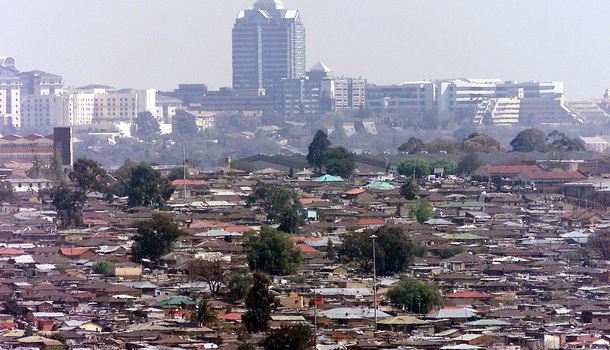
The DA is not going to bring back Apartheid, at least not in the form in which we historically recognise it. That argument is largely a red herring. Elements of Apartheid already persist within the private sector. By advocating for the empowerment of the private sector, the DA is, in effect, strengthening the discretionary power of private landowners, businesses and employers to perpetuate discriminatory practices in the housing market and other economic spaces, often under the guise of exercising private property rights or employers’ prerogatives.
Discrimination is never static; it evolves to reflect the prevailing social, political and economic conditions of a particular historical period. South Africa has defeated Apartheid in its most overt and militarised form: the boots-on-the-ground machinery of racial segregation and state-enforced exclusion. What remains unresolved, however, is economic Apartheid. And any resurgence of racial domination is therefore more likely to assume this latter form.
Apartheid’s Economic Legacy
This contemporary manifestation of Apartheid is arguably even more insidious precisely because it does not necessarily require a centralised state apparatus, formal racial legislation or an organised political conspiracy. Instead, it operates quietly and independently through everyday institutional and individual decisions in offices, schools, clubs, housing markets and other social and economic spaces.
It is the HR manager who quietly discards a CV because the applicant’s name sounds “Black”. It is the estate agent who finds reasons not to show a property to a prospective Black tenant. It is the insurance company or bank that categorises you as a higher risk and consequently charges you more. It is the club bouncer who denies you entry because you are wearing “sportswear”, while allowing White patrons dressed in precisely the same manner through the door.
Discrimination Behind Closed Doors
These actors do not necessarily know one another, share an ideological commitment or operate under the direction of a common authority. They are simply exercising their individual discretionary powers within a society still structured by the historical inequalities of Apartheid. Yet, their seemingly isolated decisions repeatedly converge towards remarkably similar outcomes: the exclusion, marginalisation and economic disadvantage of Black people.
That is the nature of contemporary economic Apartheid: a decentralised system of racial exclusion in which countless independent decisions, taken by people and institutions with no apparent connection to one another, reproduce the same historically familiar racial hierarchy.
Fediverse Reactions
Post URL
Your Profile
Why do I need to enter my profile?
This site is part of the ⁂ open social web, a network of interconnected social platforms (like Mastodon, Pixelfed, Friendica, and others). Unlike centralized social media, your account lives on a platform of your choice, and you can interact with people across different platforms.
By entering your profile, we can send you to your account where you can complete this action.