
 Adam Haupt - City Press
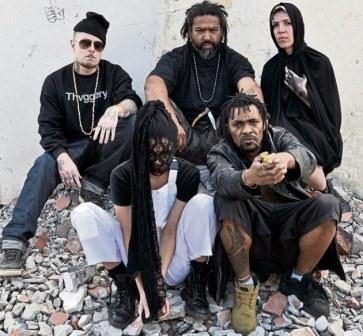 Professor Adam Haupt, an associate professor at UCT’s Centre for Film and Media Studies and the author of Static: Race and Representation in Post-Apartheid Music, Media and Film writes in City Press about the furore surrounding the latest music video from the Dookoom project spearheaded by provocative and prolific Cape town Hip Hop artist Isaac Mutant.
Dookoom’s voice in SA music
Dookoom’s ‘Larney Jou P@#s’ reminds me of my arrival at Harvard University a few years ago. I had just unpacked my bags when Die Antwoord went viral. A few scholars, cultural activists and I debated it on Facebook. The issue: Is Die Antwoord blackface?
I argued that cultural appropriation in music, theatre and media is not new.
Poet and cultural critic Rustum Kozain offered a brilliant critique on Richard Poplak’s piece on them.
Kozain said Ninja “is not a persona that has emerged in any organic way … rather, it is a persona invented, but clearly based on detailed anthropological study”.
I took up Kozain’s argument in the book Static in a chapter on Die Antwoord.
Reading Kozain, I was reminded of an exchange with producer and label owner Dplanet. Dplanet is behind Dookoom and other innovative Spaza and Afrikaans acts such as Driemanskap, Jaak, Rattex and Isaac Mutant. He told me his artists spent time with Ninja, who was very eager to learn from them.
City Press reported allegations that Ninja exploited young hip-hop crew The Glue Gang Boys for artistic material. Ninja was seemingly engaged in an ethnographic study – without the ethical concerns that plague anthropologists.
Die Antwoord’s success demonstrates that white privilege continues locally and globally. And now, finally, an underdog of Cape hip-hop is having his say. After spending time in Ashton during the farm workers’ uprising in the Boland, Isaac Mutant decided to express his frustration with the slow pace of change on Cape farms.
He speaks directly to diatribes on farm murders by such commentators as Dan Roodt and Steve Hofmeyr.
Roodt and Hofmeyr overlook the fact that poor, working class, black communities are hardest hit by violent crimes and that hate crimes, like the rape and murder of black lesbians in townships, are often sidelined.
UCT scholars Susan Levine and Leslie London reveal that exploitation of farm workers’ children, the dop system, fetal alcohol syndrome and alcohol-related violence continue on Cape farms.
The democratic values of South Africa’s Constitution are not a reality for its rural citizens. Dookoom’s video situates farm workers’ experiences within the broader narrative of colonial violence: “I remember you came here in 1652/ You a skollie too.”
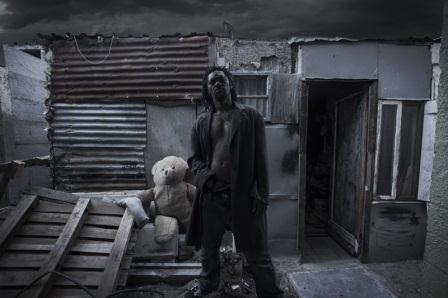 Dookoom is speaking back to discourses that frame white, Afrikaans people on farms as victims despite the fact that racialised class inequalities continue to marginalise the black majority. He also seems to speak to his own experience as an unwitting “native informant” to Die Antwoord, who have done little to share their success.
The video does not end with the killing of the farmer, the rape of his wife or the farmhouse being burnt down – as per the right wing narrative on “white genocide”.
Instead, the defiant farm workers scorch the side of a hill with a message: “Dookoom” spelt back to front. The powerful mystical Cape figure of the doekoem is invoked to signify the workers’ revolt. It speaks back to videos like Bok van Blerk’s De La Rey, which erases black subjects from the South African War, and to Van Blerk’s racist depictions of black men in Tyd Om Te Trek?, which visualises a farm attack.
Isaac Mutant may provoke allegations of hate speech or incitement to violence, but the fact is that little has improved since the farm protests ended. Larney Jou Poes inserts the rural black subject into public discourse beyond the limited terms set by Van Blerk, Roodt or Hofmeyr.
» Haupt is an associate professor at UCT’s Centre for Film and Media Studies. He is the author of Static: Race and Representation in Post-Apartheid Music, Media and Film
Click here to view the originbal article in City Press
Fediverse Reactions
Post URL
Your Profile
Why do I need to enter my profile?
This site is part of the ⁂ open social web, a network of interconnected social platforms (like Mastodon, Pixelfed, Friendica, and others). Unlike centralized social media, your account lives on a platform of your choice, and you can interact with people across different platforms.
By entering your profile, we can send you to your account where you can complete this action.