


 Ryan Swano
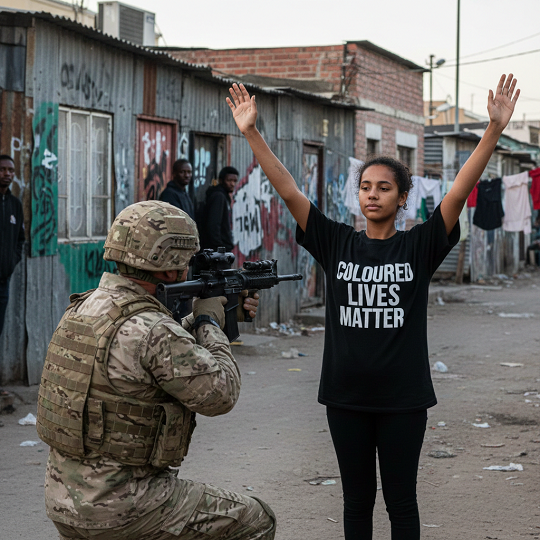
In the absence of credible and well-functioning non-aligned civil rights movements that focus on issues that plague Coloured communities, it easily becomes the domain of political parties to take on the mantle of specifically speaking for Coloured people.
When those who should lead fail to do so, then those who shouldn’t will.
At first the Patriotic Alliance and Gayton McKenzie were at pains to make it clear that the Coloured Lives Matter campaign was was Not a PA campaign, but let’s not fool ourselves.
It soon became one.
This will always be folly, since political party policies are not focused on solving the root causes of societal problems, but on securing the popular vote.
Though I will often be mentioning the Patriotic Alliance as the primary example, since they are the ones purporting to lead the Coloured Lives Matter campaign, you need to understand that much of what I am about to say also applies to many of the other political parties and politicians who claim to speak for Coloured People.
So, perhaps I am not qualified to speak on whether Gayton McKenzie, specifically, is sincere in wanting to bring about fundamental changes in Coloured communities. His followers believe he is, so let us assume that it is true, but…
The problem with the Coloured Lives Matter campaign being led by a political party, whether it’s the Patriotic Alliance or any other, is that it very quickly becomes exclusive instead of inclusive.
It also creates the false impression that the party leading the campaign has an automatic sole right to define what Coloured Lives Matter should mean.
From a quick informal survey, I’ve gathered that, on a basic level, people simply do not want to have their support for tackling the issues to be confused for support of the political party leading the campaign, but it is, in fact, far more nuanced than that.
What’s a political party like the PA then to do? They double down, and the narrative is spun by them that the people who choose not to participate, let alone choose to criticise the campaign, ‘obviously’ do not care about Coloured people. They then also peddle the idea that people are against the campaign simply because they hate the political party leading it.
However, whether or not people will support a civil rights campaign is far more nuanced than what politicians seem to grasp.
The ideal for most people will always be for a non-aligned civil rights movement to coordinate civil rights campaigns and then welcome political parties to support the campaign, but not to control the narrative.
Gayton McKenzie, when speaking about Coloured Lives Matter, has said a few things that I think is really important for Coloured People, in terms of recognising the need for a Coloured civil rights campaign to end gang violence. Then he worked his charismatic magic and threw in a few things that made it clear that the campaign was going to be an extension of Patriotic Alliance policies and views.
Those party policies and views are not universal to all Coloured people.
At some point in the run-up to 1 December 2025, I realised that the campaign should have simply been called the Patriotic Alliance “Bring In The Army” campaign.
Campaign Based on Populism and a Lack of Nuance
Just like the internet and particularly social media, political parties Do Not Like Nuance. Most people who follow populist leaders also do not care for nuance, and thus easily fall into the cult-like idea that their leaders have all the right answers, always.
The Coloured Lives Matter campaign, as led by the Patriotic Alliance, only addresses the convenient halves of the truths we need to face as Coloured people. Political Parties, whether it is the PA or any other, will always offer the public a rhetoric that is easy to digest and that places them in a favourable light against other parties.
- We can all agree that many of the issues that Coloured Communities face are systemic, and will take political will and ingenuity to deal with. To blame those issues mainly on Apartheid, on the ANC’s poor governance nationally and on the DA in the Western Cape only looking after white voters, is only addressing part of the problem. Yes, those are real problems, but they are only part of it.
- Saying the systemic issues include “the lack of police resources and uneven deployment”, and a “delay in bringing in the army” are the other obvious easy options. Yes, we desperately need better policing, but we need to define what that means.
- Blaming unemployment and then by extension blaming that on BEE, is another easy political cop-out. We need a Better Plan for Coloured People.
- Mr McKenzie then throws in a snide remark to directly correlate support for the Palestinian cause among Coloured people with the lack of support for the Coloured Lives Matter campaign.
- In a recent post talking about their Coloured Lives Matter campaign, McKenzie again, as he has on other occasions, reverts to calling us the “Coloured Race”. He either doesn’t care or doesn’t understand why is this a problem.
I want us to look at the above points, gleaned from what the Patriotic Alliance offers, in light of the truths we need to face about Coloured Lives Matter.
The first two points I delve into, which are actually the last ones above, might seem peripheral but they set a baseline for who the Coloured Lives Matter campaign claims to represent as per McKenzie and co.
The points that follow thereon are the problems that we as Coloured Communities have to do some serious introspection about.
Can Calling Coloured People a ‘Race’ Ever Build Unity?
The first thing a South African Politician who claims to speak for Coloured People needs to understand and also articulate, is that Coloured is Not a Race. Once you understand, and start articulating that, you will actually find that Coloured People have more that can unite us, than there is of that which can divide us. If we are to reach the ideals of a non-racial society as espoused in the Freedom Charter, then we need to recognise that Coloured people are a Distinct Population Group but We Are Not a ‘Race’.
Gayton McKenzie needs to please stop using the term “Coloured race”.
Yes, Coloured People are a Population Group, a Demographic, and a Culture, but Coloured People, by the very nature of our mixed ancestry, within the definitions of the (unscientific) concept of ‘race’, cannot be called a ‘race’.
By calling ourselves a ‘race’, we silo ourselves in all the stereotyping and misconceptions, as well as all the exclusions that started with the Verwoerdian system and still continues post-94. We are then actually affirming the “Not White Enough and Not Black Enough” paradigm that we unwillinglingly find ourselves in.
You cannot call for racial categories to be scrapped, like some in the PA do, and then boldly speak of yourself as part of the Coloured “race”.
You also can’t convincingly say you are calling for (many of us as) indigenous descendants of Khoe & San to be recognised as Africans and then at the same time say we are part of a ‘race’ that technically does not fall within the definitions of race.
Why Pit Support for the Palestinian Cause Against Coloured Lives Matter?
Both the killings of Coloured People and the Genocide of Palestinians are important issues. Caring about one does not mean you do not or cannot care about the other. There are however very different approaches to these two issues that make them not-so-easy to compare.
The Patriotic Alliance is clear in its stance that it supports the Zionist state of Israel. This alienates many who support the Palestinian cause from supporting anything related to the Patriotic Alliance.
In our communities, particularly on the Cape Flats, a large proportion of those grassroots activists who you will see regularly protesting against gangsterism, advocating for better policing, and demostrating against social ills like GBV & Child Abuse, are also the ones you will see marching against the Israeli Apartheid occupation of Palestine.
For the PA to take pot-shots at those who march in support of Palestine is disingenuous.
If the Coloured Lives Matter campaign were to be led by civil society organisations, then no one would have qualms if the PA supported it, but the message from the PA seems to be clear that if you support Palestine, then you don’t believe that Coloured Lives Matter. How?
How Has Coloured Lives Matter Lost Focus?
We so easily forget that a few years ago during the lockdown we protested, crying Coloured Lives Matter, when we wanted the army out of our communities because they were hurting and killing innocent Coloureds, but here we are, with the PA leader using that same term Coloured Lives Matter, to call for the army to come into our communities.
I’m not going to say whether you should believe it is right or wrong for the army to come into our communities, but isn’t it a strange about-turn of the phrase?
Isn’t that a case of usurping the term Coloured Lives Matter?
Protesting against systemic issues like the lack of policing is important. It is undeniably a huge part of the problem, but it is not the only problem, nor is it the root cause of the problem.
We all seem to want police to be more tough on criminals, and many are calling for the army to come into our communities.
Hopefully we won’t again be crying the older version of Coloured Lives Matter when police with less restrictions on them and the army inevitably manhandle, hurt and even kill innocent Coloured people. Wasn’t there a time not too long ago when police and the army seemed to have Targets on Coloured Backs and we cried Coloured Lives Matter when Nathaniel Julies was murdered by police?
This post below is an example of how we originally used the term Coloured Lives Matter and for all the other times innocent Coloured people were assaulted or killed by police and the army during the 2020 lockdown.
Will Future Coloured Lives Matter to the Little Coloured Criminals Our Communities Raise?
Sadly, even directly protesting against gangsterism, and against Coloured on Coloured crime, will not be effective unless the aim is to upend the whole culture of what feeds gangsterism, drug abuse and crime in general.
Any Coloured Lives Matter campaign cannot simply target the lack of policing and call for bringing in the army. It also needs to address the issues that lie within our communities.
Coloured Lives Matter needs to target the way our kids drop out of school, get caught in drugs and gangsterism, and how addiction creates a drug market that drug dealers will fiercely protect.
Worse is that at the end of the day, it is often our Coloured mothers, fathers, sisters and brothers who will enable and help their criminal children evade arrest. A recent example was when a group of people in Hanover Park were pelting Law Enforcement officers with stones when they tried to make an arrest.
Does Coloured Education Not Matter?
We have whole communities where unschooled young parents with addiction problems and no parenting skills are raising a generation of children who think it’s normal to go on a rampage on Guy Fawkes day, who roam the streets when they should be in school, and on the days they bunk, teachers who are terrorised by them can breathe a sigh of relief.
Coloured Lives Matter needs to target the fast downward spiralling levels of education in our communities. The South African Schools Act does not define truancy as a crime by the child, although parents can be held criminally liable if children are not attending school without an acceptable reason. Coloured Lives Matter needs to look at how we can protest for the enforcement of school attendance and, in severely difficult cases, the institutionalisation of criminally delinquent children, with an aim of rehabilitation.
There is a reason there are markedly fewer high schools compared to primary schools in our areas. It is factored into the long-term planning that a large proportion of Coloured kids will drop out before reaching Grade 9, let alone reach Grade 9 and opt to go the FET route.
Why would they build more high schools if we are the ones not ensuring that there is a measurable demand for them?
We often look at matric pass rates as a measure of a community’s quality of education, but that is only measured against the number of learners who enrolled for the exams.
Nobody compares the matric pass rates to the number of learners who started high school 5 years ago. There is no attention being paid to the fact that our communities have extraordinary large numbers of school dropouts.
When Uneducated Unemployable Coloureds Matter to Politicians
Especially closer to elections, politicians are shouting, claiming that the kids on the corners need employment and blaming AA and BEE, but look a bit deeper, scratch under the surface and you will see that young Mr-Gee-R2-daa and Miss-Baby-Blue-Gown or Miss-Dirty-Pink-Onesie on the corner at 2 pm are by and large Unemployable.
Yes, their Coloured Lives Matter too, but it is untenable to keep protesting for cashier jobs at a local supermarket on behalf of people who dropped out before Grade 9 when the minimum requirement is Grade 12. It is especially useless when those who have Grade 12 often do not want to be seen dead working as a cashier or a shelf packer in their own area, where they have “an image to uphold”.
Coloured Lives Matter when we honestly look at how Coloured high school kids do not seem to have access to information about Subject Choices for In-Demand Careers, and what options there are to fund their studies.
We hear too many stories of matriculants who did not bother to apply to study because they have been led by ignorant and uneducated Coloured adults to believe that they do not qualify for acceptance at tertiary institutions and will not qualify for NSFAS or other forms of bursaries and scholarships.
How can you say that you don’t qualify if you didn’t even apply?
Meanwhile, organisations like the Kullid Foundation and Centre of Excellence Bishop Lavis host NSFAS Application workshops respectively in Gauteng and on the Cape Flats. The turnout always is sadly low, but almost all who show up either end up successfully applying to universities or are guided to alternative ways to further their education.

Do Coloured Lives Matter When Fighting BEE is Just a Smoke Screen?
The biggest problem we have with BEE should not be its existence, but its terrible implementation.
The easy option for politicians is to call for the baby to be thrown out with the bath water and completely scrap BEE and AA, but when you look at the white controlled economy of the Western Cape, and which population group holds the most high-ranking positions in both industry and in government sectors, local and provincial, then will scrapping BEE really matter?
Simply scrapping BEE will not automatically mean Coloured people will have better lives and suddenly get more jobs, but it will definitely bolster and protect white privilege.
We Need A Better Plan.
ALSO READ: BEE Is Not The Problem – Bad Implementation Is
Lately, every day on social media we are reading bios of Coloured People who have reached the higher echelons of the business world. We do not see any highly qualified Coloureds saying that they are sitting on street corners because of BEE and AA.
They are out there getting things done.
Once politicians stop shouting populist rhetoric and start focussing on the fact that the actual root causes of the issues in our communities are not only systemic but by and large are self-inflicted; only then we can start seeing if BEE and AA are having as bad an impact on Coloured communities as politicians are claiming it to be. Frankly, it doesn’t.
Even if BEE and AA were to be scrapped today, the issues in Coloured Communities that are being blamed on BEE and AA will remain unresolved, because politicians are not interested in tackling the root causes, but will use populist rhetoric to vie for the Coloured Vote.
Switching Out the Narrative
We should never forget that the Black Lives Matter campaign was against Police Brutality in the United States, and was not addressing Black on Black crime, because they knew that it’s a separate issue needing introspection and its own interventions.
When, a few years ago we first talked about Coloured Lives Matter, it was in the context of Police Brutality against Coloured People.
Do those now controlling the narrative really believe Coloured Lives Matter will make a difference, or is it just a political party slogan leading up to the 2026 Local Government Elections?
ALSO READ: The Army That We Really Need
If we really believe Coloured Lives Matter, we as Coloured Communities need to do a whole lot of introspections and start looking at our own interventions that will break the cycles that lead to Coloured on Coloured crime.