

 Candice Klein-Mutendi

Introduction: Silenced in the Spotlight
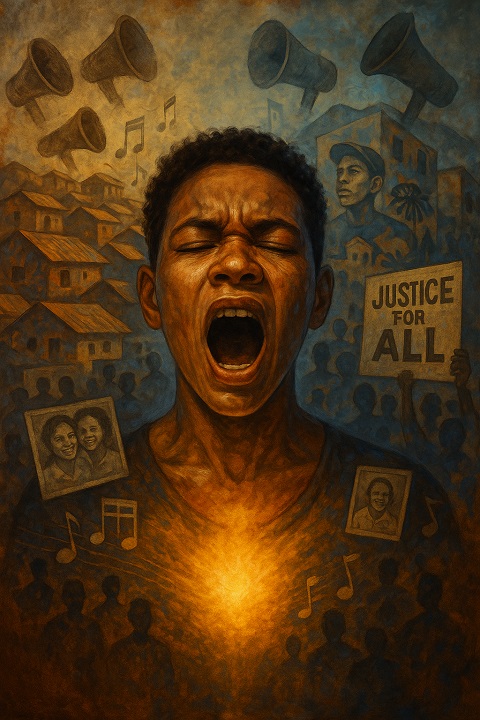
In a country often lauded for its diversity, South Africa’s national narrative continues to sideline a significant demographic: the Coloured community. Despite constituting over 8% of the population — particularly concentrated in the Western Cape and parts of Gauteng — Coloured South Africans remain largely invisible in the upper echelons of political leadership and mainstream media representation.
This investigative report unpacks the systemic underrepresentation of Coloured voices, the historic roots of this marginalisation, and why amplifying these perspectives is critical to an inclusive democracy.
A Brief Historical Context: From Classification to Erasure
The apartheid regime categorised Coloured people as a separate racial group — “not white enough” and “not black enough.” While this imposed identity was weaponised to divide, it also left the community in a political and social limbo post-1994. In the democratic era, policies of transformation have often overlooked Coloured people, lumping them into broad categories that fail to address their specific challenges.
According to researcher Zimitri Erasmus, the Coloured identity has been treated as either an “in-between” or a “non-identity,” particularly by political institutions seeking a black-and-white narrative of racial injustice and redress. This has had real-world implications.
Politics: A Case of Strategic Invisibility
Coloured representation in politics is disproportionate to the community’s size and political engagement. In Parliament, very few high-profile leaders openly identify as Coloured, and when they do, it is rarely with a platform tied to the specific needs of their communities.
The African National Congress (ANC), the Democratic Alliance (DA), and even the Economic Freedom Fighters (EFF) have fielded Coloured candidates, but critics argue this is often performative or strategic — aimed at vote banks rather than long-term inclusion.
Coloured Parties: A Numbers Game
Granted, there are two parties whose campaigns are overwhelmingly aimed at the Coloured Population, namely the Patriotic Alliance (PA) and the National Coloured Congress (NCC) represented in the National Assembly. Respectively with nine (of which 8 are deemed to be Coloured) for the PA and two for the NCC, that makes up ten (10) Coloured MP’s between the two parties.
That however only constitutes 2.5% of the entire National Assembly and therein lies the rub.
Any parties that only have a Coloured base of support, even when the numbers are combined, will certainly never garner the entire ‘Coloured Vote’. Even in the highly unlikely event that they were to get Every Eligible Coloured Voter to vote for them, combined they’d only have a maximum 10% of the seats in the National Assembly.
We of course know that the Coloured population is not a “Homogenous Voting Block”, for lack of a better term, and Coloureds do not simply vote for ‘Coloured Parties’ for the mere sake of them being Coloured Parties.
Still, we have to concede that these two parties are a much needed voice for issues specifically pertaining to the Coloured population group, but if they remain solely focussed on representing Coloureds, they will forever only occupy the opposition benches and at best become king-makers in coalitions.
Case Study: The Western Cape
The Western Cape is the only province where Coloured South Africans make up the majority. Yet even here, governance often oscillates between racial tokenism and actual inclusion. A 2023 University of Cape Town study found that Coloured communities feel “politically homeless,” with neither the ANC nor the DA effectively addressing their socio-economic issues — like gang violence, school dropouts, and drug abuse.
As one Mitchells Plain community organiser told Bruinou.com, “We are courted during election season, then forgotten for five years.”
Media Representation: Stereotypes or Silence
The situation is no better in South African media. While Black and White South Africans have seen increasing representation in film, television, and journalism, Coloured characters and voices are often confined to outdated tropes — gangsters, maids, or comic relief. Media watchdogs note a glaring absence of Coloured anchors, editors, and decision-makers in national outlets.
The Numbers Don’t Lie
According to the B-BBEE Commission’s 2024 Media Transformation Report:
- Only 6% of leadership positions in major media houses are held by Coloured individuals.
- Coloured creatives receive less than 5% of funding from the National Film and Video Foundation.
- Radio remains the only format where Coloured voices are heard consistently, mainly through stations like Good Hope FM and community broadcasters.
But radio alone cannot carry the weight of an entire community’s cultural and political identity.
Why It Matters: The Danger of One-Story Narratives
When Coloured perspectives are excluded from public discourse, it reinforces stereotypes, deepens feelings of marginalisation, and distorts the national narrative. Issues unique to Coloured communities — such as spatial apartheid, language erosion, and intergenerational trauma — are neglected in policymaking, advocacy, and cultural conversations.
As author and poet Nathan Trantraal notes, “If you are not at the table, you are on the menu.”
Solutions and the Way Forward
To change the status quo, multiple interventions are needed:
- Inclusive Policy Reform
Affirmative action and employment equity policies must be reassessed to include more granular demographic tracking and ensure Coloured people are not left behind. - Funding for Coloured Creatives
Government arts bodies and film funds must proactively support Coloured filmmakers, writers, and journalists to tell their own stories. - Political Platforms That Listen
Existing political parties must stop treating Coloured communities as electoral afterthoughts. Alternatively, the rise of grassroots, community-led political movements could reshape local governance. - Media Watchdog Accountability
Independent oversight and diversity audits should be introduced across media platforms to track and improve Coloured representation.
Conclusion: A Seat at the Table Is Not Optional
Representation is more than a moral imperative — it’s a democratic necessity. Coloured South Africans have been instrumental in shaping this country’s history, from struggle heroes to frontline workers, yet their voices are still largely absent from the national conversation.
This erasure is not accidental — it is systemic. And unless challenged, it will continue to disenfranchise millions of South Africans whose lived experiences, cultural identities, and political voices matter.
It’s time for that to change.