


 Ryan Swano
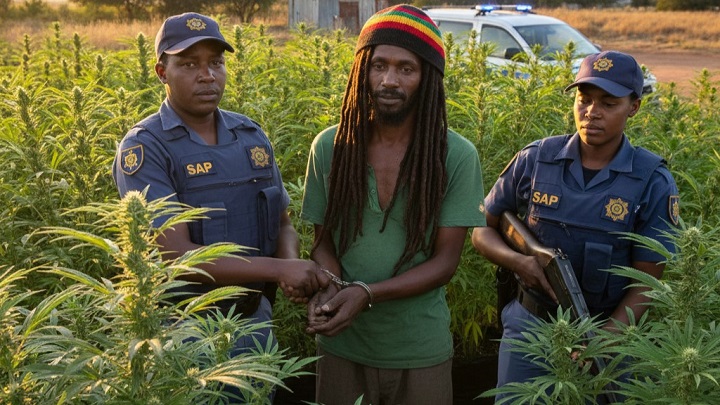
Despite repeated policy commitments and court precedents affirming the decriminalisation of private cannabis use, grassroots cannabis communities in the Western Cape continue to face what activists describe as systematic harassment by the South African Police Service. This is the view of the Adwa Movement, which has raised the alarm over ongoing unlawful arrests, raids without warrants and the selective targeting of Ras Tafari households and legacy growers.
According to the movement, SAPS officers in the province persist in ignoring recommendations and instructions emerging from government sanctioned processes, including the Cannabis and Hemp Phakisa Action Lab, the North West University Indigenous Knowledge Systems Sandbox, the South African Human Rights Commission report on the rights of the Rastafari, and the ongoing National Dialogue process. These frameworks were intended to guide a more equitable and rights based approach to cannabis regulation, yet on the ground, activists argue, policing practices tell a different story.
Recent ‘Unlawful Arrests’ of Rastafari
Two incidents between Friday 9 and Sunday 11 January 2025 in Delft and Belhar have become emblematic of this disconnect. In one case, SAPS officers reportedly arrested a backyard grower cultivating 28 cannabis plants for personal use. The arrest was publicly celebrated on the SAPS Western Cape Facebook page, which encouraged residents to report “suspicious” cannabis related activity. This, the Adwa Movement says, stands in stark contrast to the existence of large scale cannabis facilities operating openly with the endorsement of various government departments.
For activists, this disparity highlights a pattern of structural violence in which poorer households are criminalised while well-resourced operators remain largely untouched. Cases arising from such raids are routinely struck off the court roll by the National Prosecuting Authority, reinforcing claims that arrests are unlawful from the outset.
The arrest of Elder DJ Culture, the MBOSA Western Cape Commissioner, has further inflamed tensions. He was detained for three nights in Bellville SAPS holding cells on a charge of obstruction of justice after intervening during a raid allegedly conducted without a search warrant. The case was later dismissed, adding to concerns about abuse of police powers.
Poor Rastafari Households Disproprtionately Targeted
Ms Nadine Du Plooy, National Convenor of the Global Cannabis March South Africa, has pointed to a clear pattern in enforcement. She notes that Rastafari households in lower income areas are disproportionately targeted, while cannabis related businesses operating from suburban shopfronts and commercial properties continue trading under the guise of social clubs. The result, she argues, is a deepening class divide within the cannabis sector, where access to legal advice and capital determines who is policed and who is protected.
Respecting Rastafari Rights: Decolonising Faith, Cannabis, and the South African Conscience
Against this backdrop, MBOSA and the Rastafari National Council have been formally recognised by the Presidency as participants in the National Dialogue hosted by UNISA. As part of this process, a Cannabis Community Imbizo is scheduled to take place in Cape Town by May 2026. The dialogue is expected to bring together community representatives, government departments, SAPS leadership and the Department of Justice in the Western Cape.
Collection of Cannabis Arrest Data
In preparation, MBOSA chairperson Tshidiso Setshogwe has called on the public to submit details of all cannabis related arrests since June 2023. This data will be presented to the Department of Justice as part of the National Dialogue mandate.
To participate in the submission, please forward your case details MBOSA.
Contact – Mobile: 067 979 4023
email: mbosanat@gmail.com
All information forwarded to the Adwa Movement channels will be submitted to MBOSA
For the Adwa Movement, the message is clear. Until cannabis commercialisation is guided by equity and restorative justice, grassroots communities will remain vulnerable. In their words, an injury to one remains the concern of all.
Find more detais on the Cannabis and Hemp Phakisa Action Lab, the North West University Indigenous Knowledge Systems Sandbox, the South African Human Rights Commission report on the rights of the Rastafari, and the ongoing National Dialogue process.