


 Henriette Abrahams
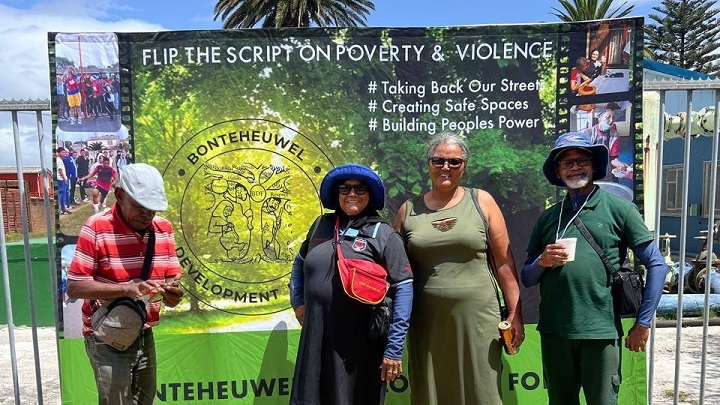
Every school holiday on the Cape Flats comes with a silent alarm: for children aged 8–20, risk rises while rest disappears. Gang recruitment intensifies. Substance abuse increases. Gun violence spikes. Homes already strained by poverty, trauma, and addiction buckle under long days with few safe spaces.
This past holiday season, our community chose a different response.
Through a street sports and wellness programme, we transformed blocks, streets, and sports fields into safe spaces, not symbolically but practically.
We fed children. Offered psychosocial support. Created routine, structure, supervision, and belonging. We placed adults where gangs usually operate and care where violence often thrives.
For several weeks, children who normally navigate gang lines and drug trade corners moved instead between training sessions, wellness clinics, safeguarding tents, and tournaments. The result was clear. Gang recruitment weakens when care is consistent and present.
Care Is Not Soft. It Is Strategic.
Gang recruitment is often framed as a law-and-order problem. But its true fuel is absence: absence of supervision, opportunity, nourishment, and safe spaces. Our programme replaced absence with presence, and it worked.
Children were not merely “kept busy.” They were seen. Fed. Supported. Monitored. Guided by coaches, community health workers, neighbourhood watches, elders, and volunteers who know their names and their blocks. Wellness teams screened for undernutrition, high blood pressure, and stress. Safe spaces allowed children and parents to disclose abuse, neglect, and trauma without fear.
This is a Safety Commons in practice: a shared, protected ecosystem of care rooted in community ownership.
What We Learned from the Ground
Three lessons stand out.
First, safety is relational. Children felt safe not because of fences or uniforms, but because trusted adults were consistently present. Many participants come from households affected by substance abuse, domestic violence, or extreme poverty. Some had to pass through active gang territories, under adult supervision, to reach the safe spaces we created. The act of arriving safely mattered as much as the activity itself.
Second, sport alone is not enough. Football opened the door, but wellness, psychosocial support, dignity hampers, and nourishment kept it open. When children received food parcels, toiletries, and school stationery, they responded not with entitlement but pride. Dignity matters. When care meets material need, trust follows.
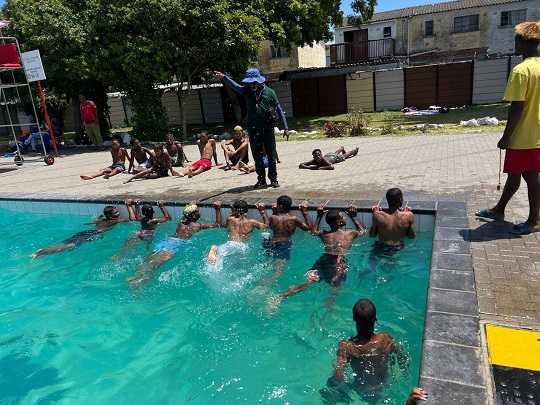
Third, community infrastructure already exists. Neighbourhood watches, community health workers, local leaders, faith institutions, and sports organisers are already doing the work. What is missing is formal recognition, coordination, and sustained resourcing.
Disruption by Design
This programme was not accidental. It was scheduled over weekends and peak-risk periods when substance abuse and violence surge. Blocks became play zones rather than recruitment zones. Streets became routes of safe passage rather than sites of intimidation.
In effect, we disrupted gang recruitment by making it harder to operate unnoticed. This is prevention in its most practical form. Over the holiday season, more than 200 children moved safely through our blocks, shifting time usually spent in gang territory into play, wellness, and learning.
The Limits of Pilot Projects
Despite clear outcomes, community-led initiatives like this remain precarious. Permits are questioned late. Bureaucratic hurdles appear without warning. Funding is short-term, inconsistent, or withdrawn at critical moments. Communities are asked to perform miracles with volunteer labour while navigating administrative resistance.
Municipalities and government departments often speak of safety and youth development, yet treat community programmes as temporary or peripheral. Pilot projects are launched, celebrated, and quietly abandoned. Safety Commons require institutional commitment, not seasonal attention.
What Must Happen Next
If government is serious about disrupting gang recruitment and substance abuse, the following must change:
Block-based after-school programmes must be formalised, not treated as charity. Safe spaces should exist in every block, especially in known gang territories.
Municipalities must shift from control to collaboration.
Community organisers should be supported early with permits, access to facilities, and logistical coordination.
Departments must integrate services. Sport, health, social development, education, and safety cannot operate in silos. Integrated care produces real results.
Funding models must be multi-year. Prevention cannot be seasonal. Children do not become safe because a programme ran once.
Communities must retain leadership.
Safety Commons work because they are rooted in lived knowledge, not outsourced management.
Section 28 of the Constitution guarantees every child the right to protection from maltreatment, neglect, abuse, or degradation. Yet enforcement without community care leaves this promise hollow.
From Holiday Intervention to Permanent Protection
Our holiday programme ended, but its impact did not. For many children, it was a rare experience of sustained safety and attention. For families, it was a reminder that alternatives exist. For the community, it proved that organised care can reclaim space even in the most violent contexts.
The next step is clear. Permanent, block-based, after-school safety programmes must be established across the Cape Flats and other gang-affected areas. When communities are resourced to care, gangs lose their grip.
Children deserve more than survival. They deserve safety, dignity, and futures defined by possibility, not violence.
The Community Sports Against Violence Tournament was organised by the Bonteheuwel Development Forum, BDF, along with other role players. The BDF is a community based NGO consisting of street and block committees that are tackling bread and butter issues of our community in the areas of safety, poverty, health, youth, women, food security, etc.
Henriette Abrahams is a Community Activist based in Bonteheuwel, Cape Town and is also the chairperson of the Bonteheuwel Development Forum.