


 Henriette Abrahams
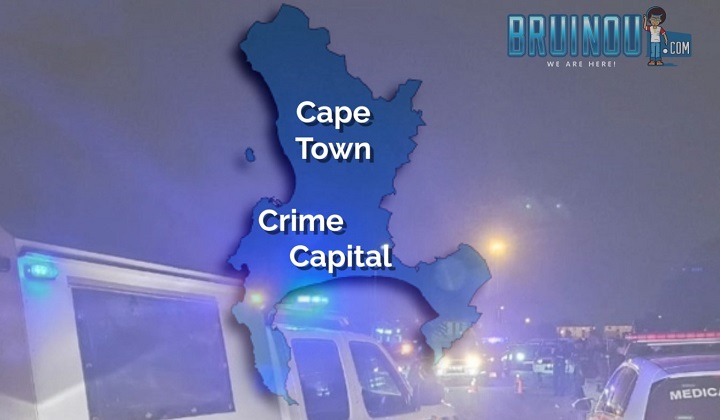
Last week I wrote “Blood on Their Hands” to expose how the Cape Flats bleeds while the state looks away. Today, Acting Police Minister Firoz Cachalia confirmed the betrayal in Mitchells Plain: there is no resourced plan to stop the killings. SAPS, the Provincial Commissioner, and the so-called justice cluster admitted plainly that while a strategy has been “presented,” it remains unresourced, unimplemented, unfelt in our streets.
The audacity is staggering. For years, families have buried babies, mothers have been executed on pavements, and children have walked to school through crossfire. Now SAPS tells us plainly: we don’t have a plan. Not “we failed,” not “we are sorry.” Simply: we never had one.
A Cut to the Gut
As a mother raising children on these streets, this cuts deeper than words. When Cachalia shrugs that the plan “must still be implemented,” what he is really saying is our lives are expendable. That our safety is not urgent. That the corpses piling up in Hanover Park, Bishop Lavis, Mitchells Plain, Gugulethu, Philippi, and Khayelitsha can wait while police shuffle papers.
It is a gut-punch to every parent who holds their child tighter at night, every grandmother who locks herself in while gangs rule the block. We’ve come full circle. In 2019, I wrote “Rather send in an army of real and true revolutionaries,” demanding psychologists, social workers, nutritionists, not more guns. Six years later, nothing has changed. We still bury babies while officials recycle empty strategies that exist only on paper, never resourced, never implemented, never felt on our streets.
SAPS Management: Politics Over People
The Provincial Commissioner and his management team must take responsibility. Western Cape SAPS is crippled not just by under-resourcing but by internal politics, factional battles, promotions driven by loyalty over competence. Crime Intelligence is starved, and detectives struggle without manpower or basic tools.
KwaZulu-Natal’s Lieutenant-General Nhlanhla Mkhwanazi has already exposed the stakes of this decay. He accused senior police leadership including Minister Senzo Mchunu and Deputy National Commissioner Shadrack Sibiya of political interference, disbanding task teams investigating political killings, withdrawing dockets, and protecting politicians, business figures, and even judges linked to the underworld.
This isn’t remote drama. It reveals how collusion between SAPS leadership, state officials, and criminal networks is not a rumour but a reality. And it leaves us asking: if this happens openly in KwaZulu-Natal, what deals and silences bind our own Western Cape SAPS management? If you keep detectives under-resourced and cripple intelligence, you don’t fight gangs, you protect them.
Playing Politics with Corpses
I rage at the Provincial Commissioner and his management. They play bureaucratic games while our blood stains the streets. They hold “plans” in boardrooms but bring no protection to schools, no relief to drowning detectives, no break for families living in war zones.
I rage at DA MEC Anroux Marais and Ian Cameron. Even as bodies fall, they weaponise this carnage pushing “devolution of SAPS powers” as a 2026 election promise. They are not fighting for our lives; they treat our deaths as political capital.
And I rage at ANC leadership, for decades of empty promises, budget cuts, and smoke-and-mirror task teams that never materialise into real protection. Between the ANC at national and the DA in the province, our communities are stuck between two political projects that feed on our pain rather than end it.
ALSO READ: THE COLOURED DECOY – How Violence Is Used to Distract Us and Protect Political Power

Violence Is the Economy
Cachalia admitted gangs are morphing into organised crime rich enough to recruit our youth with R2,500 per job. This is not new. Gang violence is not random chaos, it’s an economy.
An economy enabled by:
- Structural Violence: apartheid’s geography—dumping grounds with failing schools, clinics, and jobs.
- State Collusion: corrupt officers, officials trading silence for money or votes.
- Private Profiteering: developers exploiting instability, alcohol and funeral industries capitalising on grief, private security monetising fear, insurance companies raising premiums on our misery.
This is why the killings won’t stop: because they serve both criminal and “respectable” interests.
On Our Own
The truth is brutal but simple: we are on our own. No minister, no commissioner, no MEC will save us. If we want safety, we must build it ourselves.
We must form neighbourhood watches, street committees, and patrols 24/7, not once a week. We must build safe walkways for our children, women, and workers. We must protect each other because the state has abandoned us.
We must report crime and corruption wherever it hides: gangsters, rapists, police officers, business owners, state officials, even neighbours. Silence is complicity.
ALSO READ: The DA is Lying to You: Crime Motion is a Distraction
Rage Into Action
Cachalia says he carries the “burden” of his role. The real burden is carried by mothers burying children, by kids learning to run at the sound of gunfire, by workers unsure if they’ll go home alive.
Mkhwanazi’s revelations exposed the rot. Yet nothing has changed. Our streets keep bleeding.
So let us rage but let us rage into action. Rage at the state for abandoning us. Rage at SAPS management for protecting systems over lives. Rage at politicians who treat our deaths as campaign props.
Turn grief into organising, pain into power.
Because if the state will not protect us, then we must protect each other.
Henriette Abrahams is a Community Activist based in Bonteheuwel, Cape Town.