



 Tristan Flandorp
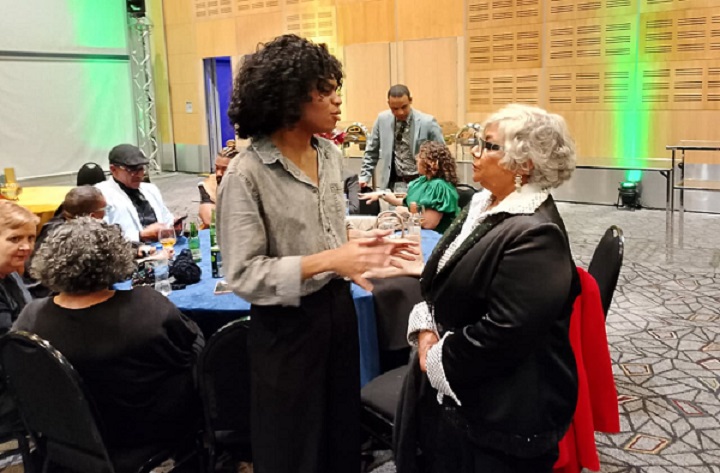
Walking into one of the kykNET Silwerskerm Awards Ceremony reception areas, I immediately noticed something striking. The room was overwhelmingly white. There were only a handful of Coloured people and almost no Black people in sight.
It was a jarring observation, considering the South African film and television industry makes considerable revenue off stories rooted in Coloured culture. Yet, as I scanned the room, it felt as though the key decision-makers in telling these stories – the directors, producers, writers – though not exclusively so, were almost entirely white. This dissonance is one of the many realities of the South African entertainment industry that we often overlook.
A Conversation with an Icon
It was later, after the awards ceremony, at the Silwerskerm Awards after-party that I had the privilege of meeting and speaking with Vinette Ebrahim, a seasoned icon in our industry whose career spans over three decades. She is widely respected not only for her craft but also for her advocacy in the struggle for representation.
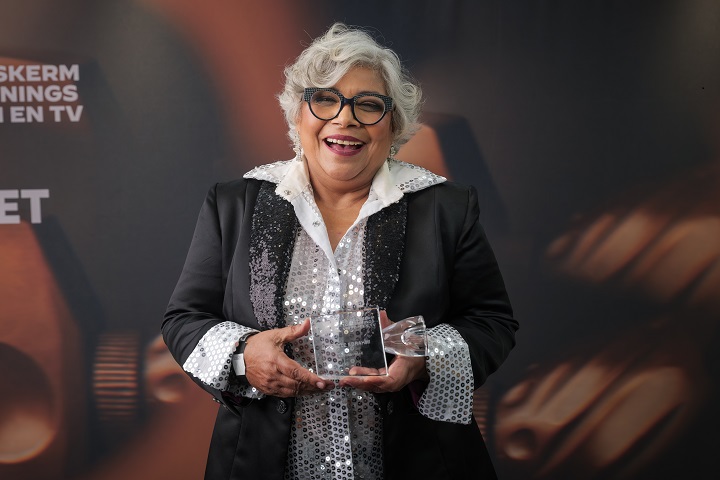
The recipient of a Lifetime Achievement Award at the 2025 kykNET Silwerskerm Awards is best known for roles such as Charmaine Meintjies in the soap opera 7de Laan, for her work in film, and on stage as a playwright and actress.
Ebrahim has spent decades fighting for fair representation of Coloured people and emerging talent, ensuring that young actors do not fall into the traps that the industry often sets – traps that lock performers into restrictive and exploitative agreements.
Her work emphasises the need for managers and agents who truly advocate for their clients, negotiate contracts that protect their interests, and allow artists to pursue independent passions without breaching the restrictive contracts that are far too common in our industry.
As someone who has been in and around the entertainment industry for over five years, wearing multiple hats and gaining first-hand experience in various capacities, speaking with Ebrahim was a pivotal moment.
I joked that I felt as if I were in enemy territory, to which she responded with a blunt honesty: “Well… essentially, you are.”
That exchange resonated deeply with me. It validated my observations about the structural inequities and the lack of true diversity in spaces that profit so heavily from Coloured narratives.
The disparity is disheartening. Here we have a festival and an industry that thrives on the culture, experiences, and stories of Coloured communities, yet most of those creating and controlling the narratives are overwhelmingly not from those communities. The perspectives being shared and the stories being told are often filtered through a white lens, shaping the way the world perceives Coloured lives.
While the actors may represent their communities on screen, the voices behind the scenes – the directors, producers, and writers – dominate the creative and decision-making processes. This reality underscores the importance of champions like Vinette Ebrahim, who use their platform to advocate for real, nuanced representation.
Challenging Systemic Barriers
Speaking with Ebrahim offered a rare glimpse into the dedication it takes to challenge systemic barriers. She spoke passionately about creating opportunities for Coloured LGBTQ+ talent, about writing her own stories to ensure authenticity, and about lifting up those whose voices are often unseen and unheard. These insights were particularly powerful for me as an aspiring actor.
Her commitment to telling real stories – stories about women, young men facing adversity, youth navigating gangsterism, and LGBTQ+ experiences – is a roadmap for the type of advocacy our industry desperately needs.
From my own lived experience, entering the entertainment industry as a young artist is incredibly expensive and resource-intensive. The cost of being seen, gaining exposure, attending auditions, and building a portfolio is prohibitive for most. Resources for emerging talent are scarce, and the industry often remains accessible only to those with privilege and financial means. This exclusivity stifles potential and forces many young artists to abandon their dreams or settle for exploitative contracts just to gain a foothold. I briefly discussed some of these realities with Ebrahim, but these reflections are deeply personal observations drawn from my own time working in and around the industry.
Ebrahim’s words reinforced the importance of systemic change. We need more resources, mentorship, and structured support for youth seeking careers in entertainment. The industry must create a secure net that allows young actors to develop their talents, build sustainable careers, and contribute authentic stories to South African media.
Exclusive contracts that limit opportunities while failing to provide consistent work are exploitative and inhumane must end. Artists should not have to choose between financial survival and pursuing their craft.
A New Generation to Advance the Struggle for Representation
Reflecting on this experience, I am both challenged and inspired. The entertainment industry, particularly spaces that profit from Coloured stories, must become more inclusive, equitable, and representative. Having someone like Vinette Ebrahim advocate for underrepresented communities and fight for fair treatment gives hope, but it is not enough to rely on a few champions. It is time for a new generation to rise, to become the voices of change, to challenge entrenched systems, and to advocate for the betterment of all aspiring artists.
As an aspiring actor, I am acutely aware of the hurdles that must be overcome. The conversation with Ebrahim reinforced the importance of perseverance, strategic support, and community advocacy. It also shed light on the ethical responsibility of networks, producers, and agencies to create fair conditions, negotiate in good faith, and recognise the real value of talent beyond mere profit. Young actors should be empowered, supported, and given equitable opportunities to succeed, regardless of their background or financial standing.
The message is clear. The industry cannot rely solely on isolated icons to push for justice. It is incumbent upon all of us – artists, advocates, and allies – to step up, tell authentic stories, and build systems that nurture the next generation. We must ensure that real South African stories are told by people who live them, that the lives of women, youth, and marginalised communities are accurately represented, and that the doors to opportunity are widened for all.
It is time to stop hoping for more leaders like Vinette Ebrahim to emerge and start becoming the new voices of hope ourselves. We must demand equity, foster talent, and dismantle the barriers that prevent emerging artists from pursuing their dreams. Only then can the South African entertainment industry truly reflect the rich diversity, complexity, and vibrancy of the communities it seeks to portray.