


 Sharne Rustin
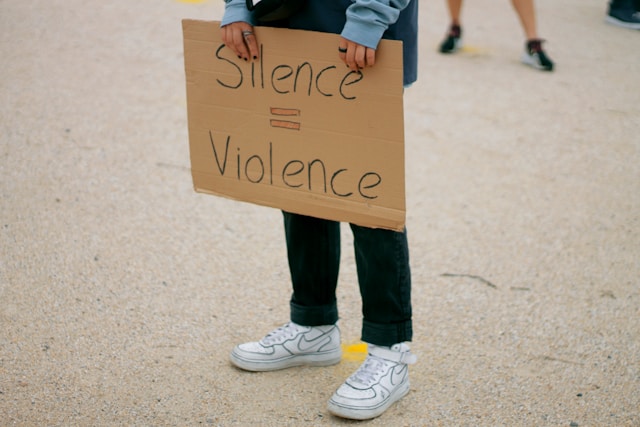
Why Isn’t Home Really Home?
Have you ever asked yourself why a child might fear the very place that should hold them safest? As mothers, we work so hard to build warm, protective homes, yet too many children in our communities go to bed dreading what tomorrow might bring. It is not because of strangers lurking in dark corners, but because danger sometimes wears the familiar face of a parent, a neighbour, or a trusted family friend.
I find myself waking at night with this thought sitting heavy: what kind of society have we become if home, the cradle of belonging, has turned into a site of fear? The statistics of abuse in South Africa are chilling, but what makes it worse is that behind each number lies a name, a child, a future cut short. And we, as a community, carry that grief in ways words can barely capture.
The Shocking Story of Baby Nikita
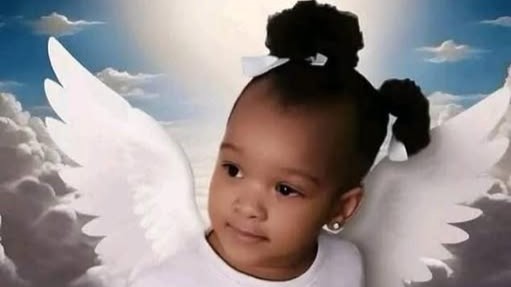
Baby Nikita was only four years old when her little body became the scene of unimaginable violence. Police in Eldorado Park rushed to a backyard shack after hearing the sound of her screams. When they entered, they found her bruised and broken, with head injuries so severe that she was taken to Chris Hani Baragwanath Hospital and placed in intensive care. She never recovered. Two days later, she was gone.
The cruelty of it all is unbearable to put into words. Her own father now stands accused of her rape and murder, while her mother faces charges too, not only for failing to protect her but for being complicit in her death. The very people who should have been her shield were her undoing. Neither parent applied for bail. Their court appearances are a grim reminder of how justice drags its feet when children need it most. (Sources: TimesLIVE, Newsroom)
At her funeral, the community’s pain spilled out into the open. Her small white coffin was surrounded by flowers, a heartbreaking symbol of innocence cut short. Councillor Juwairiya Kaldine admitted through tears, “Today is not an easy day. Our four-year-old was taken by the very hands meant to protect her.” Those words carried the weight of every parent in that room, because it was not just Nikita who died that day. It was another fragment of our collective hope.
A Community That Feels the Pain
When Nikita was laid to rest at Don Mateman Hall, Eldorado Park came together not just in mourning but in protest against the violence that keeps repeating itself. Memory trees were promised to be planted in her honour, a gesture that felt both healing and hollow. Healing, because remembrance keeps her alive in spirit. Hollow, because what we need is not just symbolic gestures but real protection for the children still here.
Community leaders spoke plainly about what is happening. Bishop Dalton Adams said that the deaths of children like Joslyn Smith, Jayden-Lee Meek, and now Baby Nikita cannot be viewed as isolated. They are chapters in a longer, tragic story of children lost to violence. He warned against the narrative that paints Coloured mothers as unfit, as “crazy” or incapable of care, insisting instead that these losses show the depth of pain communities have been forced to carry.
Ordinary people voiced their sorrow and regret too. Aunty Marie Josbo said what many were thinking: “It was our responsibility to fight for Nikita as a community.” Those words sting because they are true. How many times do neighbours hear cries, sense something is wrong, and remain silent? Sometimes out of fear, sometimes out of exhaustion, but the silence costs children their lives.
Chief Keith Duarte, better known as Chief Xam, acknowledged the grief but also admitted something raw: that perhaps it was safer for Nikita’s parents to stay in custody than face the community’s anger. That statement tells you how deep the rage runs when people feel abandoned by both family and state. (Source: Scrolla Africa)
WATCH Eldorado Park parents accused of raping, murdering 4-year-old abandon bail bid
The Echo of Addiction, Trauma, History
The question keeps circling: why does this keep happening? And if we are honest, part of the answer lies in the shadow of addiction.
Alcohol and drugs are woven into the tragedies of our community in ways that cannot be ignored. I have seen it myself: families torn apart, children left hungry, mothers turning to substances to escape pain, fathers lashing out under the weight of dependency. Addiction is not just a private struggle. It is communal. It leaks into our streets, our schools, our families, until the line between victim and bystander blurs.
Layered over this is generational trauma with the scars of apartheid and systemic poverty echoing in the present. We inherit coping mechanisms from our parents, who inherited them from theirs. Violence becomes normalised, and substance abuse becomes a release valve. In the middle of this cycle are children who never asked to be born into chaos.
We talk of breaking generational curses, but the truth is it takes more than willpower. It takes resources, healing, and leadership. And too often, our communities are left to fend for themselves.
When Leadership Does Not Lead
We want to believe that schools, churches, or the justice system will step in when families fail. But do they? The case of Enock Mpianzi is a bitter reminder that institutions also fail. He was a 13-year-old boy who drowned on a school camp because teachers were negligent, and no adult stepped in when he needed saving. That story is not about abuse inside a home, but it is about the same root problem: leaders who do not protect children the way they should.
When the government drags its feet, when courts take years to process cases, when child protection services are underfunded and undertrained, children slip through the cracks. By the time society notices, it is usually too late.
So What Can We Do?
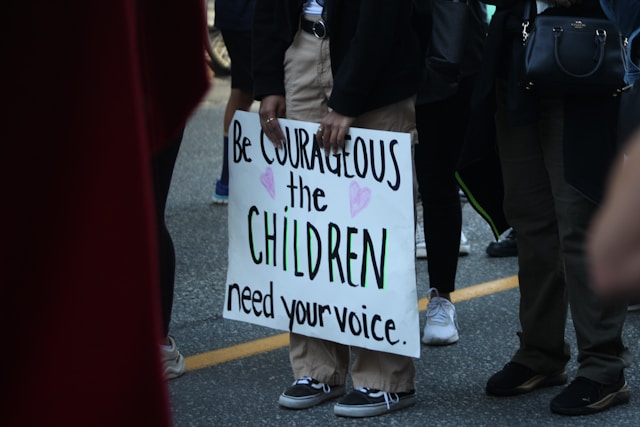
It feels overwhelming, I know. The problems are so big and the resources so small. But silence is no longer an option. We cannot keep shaking our heads at funerals, lighting candles, and then returning home to pretend all is well.
What does action look like? It looks like reporting suspected abuse, even if it makes you unpopular. It looks like demanding that community policing forums take child safety seriously. It looks like supporting rehabilitation efforts, not treating addiction as a moral failing but as a disease that needs treatment. It looks like churches and mosques creating real programmes for vulnerable families, not just handing out food parcels once a year.
As a legal advocate recently told IOL, “Our children are dependent on us to be their voice.” That is not poetry, it is responsibility.
This Is Not Theory, It Is Our Reality
I write this not as an academic but as a mother, as a neighbour, as someone who feels the heavy silence when another child’s face appears on the news.
Baby Nikita is gone, but her story echoes in every corner of Eldorado Park, in every Coloured community where mothers are fighting to protect their little ones. We can no longer accept that homes are battlegrounds, that schools are negligent, that addiction and trauma are excuses for silence.
Something is stirring, though. Community members planting trees, councilors crying openly, activists refusing to allow these children to become mere statistics. It is a fragile hope, but it is hope all the same.
Our children deserve homes where love does not hurt, where the word “parent” means protector, not perpetrator.
And as long as I breathe, I will not stop demanding that.