


 Staff Writer
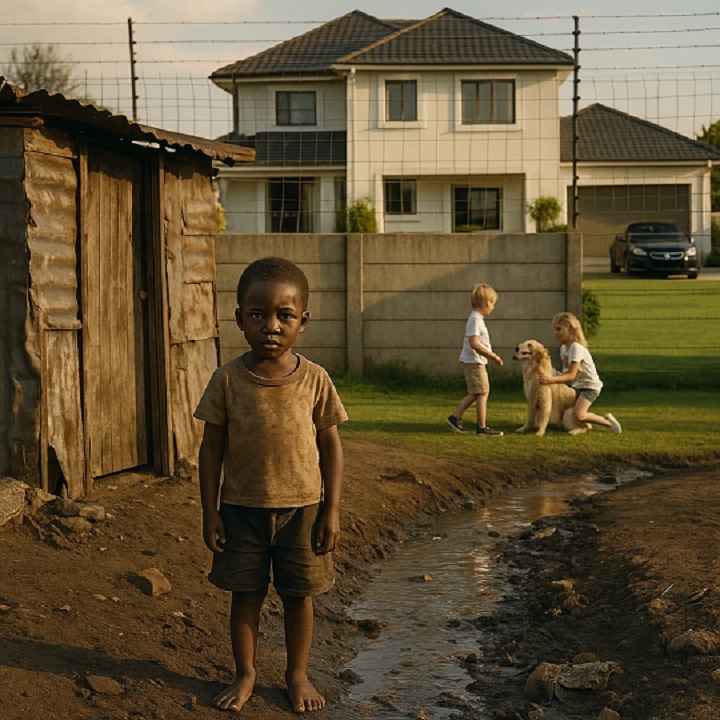
South Africa is at a crossroads — and this time, silence is not neutrality. It is complicity. The story of our country is still one of exclusion, unhealed wounds, and economic apartheid. And if you’re White in South Africa, the truth is this: the privileges you enjoy today are not an accident. They are the residue of a brutal system that excluded the majority to benefit a few. That system was not dismantled — it was simply softened, rebranded, and globalised.
Yet here we are, three decades after 1994, and many White South Africans still view economic transformation with suspicion or outright hostility. Programmes like Broad-Based Black Economic Empowerment (BBBEE) are seen as reverse racism, as if asking for equity and justice is the same as perpetrating oppression.
It is not.
It is survival. It is restoration. It is the only path to a shared and sustainable future.
The Economic Dispossession Continues
Let’s be clear: political democracy in 1994 did not bring economic justice. The vast majority of Black South Africans still live in poverty, still earn less, still lack access to quality education, networks, generational wealth, land, and capital. The median White household remains 10 to 15 times wealthier than the average Black household. That’s not by chance. That’s history left unchecked.
Economic transformation is not about punishing White people. It’s about finally fulfilling the promise of freedom and dignity for all – especially those deliberately denied it for generations. And that means redistributing opportunity, power, and ownership, not just charity or corporate tokenism.
BBBEE: A Path Toward Shared Prosperity, Not Revenge
BBBEE is often misunderstood — not because it’s flawed beyond repair (although it does need honest reform), but because many fear what they might lose. But this mindset reveals a dangerous misunderstanding of the real stakes. BBBEE is not a zero-sum game.
Empowering more South Africans economically means a bigger, stronger economy. It means more customers, more innovation, more stability. It means fewer strikes, fewer shutdowns, fewer protests, and less anger. In short, it means survival – not just for Black South Africans, but for White South Africans too.
Clinging to concentrated privilege in a country built on majority poverty is not only morally bankrupt – it is economically foolish and politically suicidal.
Capitalism As You Know It Is Failing Most of Us
The Western model of capitalism – competitive, individualist, extractive – has reached a breaking point. It has produced obscene levels of inequality, environmental collapse, and a global elite disconnected from the realities of ordinary people.
This model was never neutral. It was designed in empire, grown through colonisation, and enforced through racial hierarchy. In South Africa, it merged seamlessly with apartheid – creating a monstrous hybrid that still thrives in our boardrooms, property markets, and corporate monopolies.
If you’re White and wealthy in South Africa today, it’s likely that this system worked for you – not because you worked harder, but because the system was designed to lift you and hold others down.
We need a different economy. One rooted in justice, in shared power, in care over competition. An economy where everyone has a stake – not just a select few with trust funds, legal teams, and the right skin tone.
Time to Reflect: What Side of History Will You Be On?
White South Africans need to stop asking “What about us?” and start asking “What can we do to build a country where no one needs to ask that question ever again?”
Supporting economic transformation isn’t just the right thing to do – it is the only thing that will secure your future in this country. The alternative is deepening division, resentment, instability, and the eventual crumbling of the thin layer of comfort that still separates gated suburbs from hungry townships.
So ask yourself:
Are you actively supporting policies that redress the past, or are you benefiting quietly while resisting change?
Do you support BBBEE in your business, or do you dodge, delay, and disguise your opposition?
Are you hiring, mentoring, and promoting Black South Africans with intention and fairness?
Are you opening space at the table, or protecting your seat with vague talk about “merit”?
ALSO READ: Persistent Spatial Inequality in Cape Town Deeply Unsettling
Hope Is Still Possible – But Only With Courage
South Africa doesn’t need White saviours. It needs White allies — honest, humble, brave enough to speak uncomfortable truths at dinner tables and boardrooms. It needs business owners who will share ownership. It needs landowners who will redistribute with grace. It needs professionals who will train and uplift. It needs citizens who will use their voice not to hoard what was inherited unjustly, but to create space for the dignity of all.
If you’re White and living in South Africa today, the question is no longer whether you’re involved.
The question is: Are you part of the solution, or are you part of the delay?
The time for transformation isn’t tomorrow. It’s not next year. It’s now.
Because if we do not transform — together, bravely, honestly — we will be transformed by the rage, the pain, and the consequences of continuing injustice.
The window is closing. Choose wisely.